
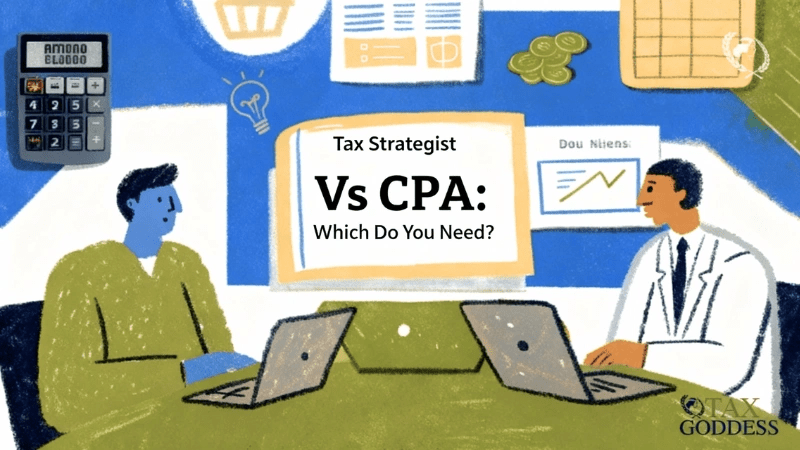
The average physician is already one of the most litigated professionals in the country, sued an average of four times throughout their career. What gets less attention is that they are also among the most overtaxed not because the system targets them, but because most physicians are operating under a financial structure that was designed for convenience, not optimization.
The result is that many high-earning medical professionals are paying $15,000 to $30,000 more in taxes each year than they legally need to. Over a 30-year career, that is not a minor inefficiency. That is a half-million-dollar gap between what you paid and what you owed.
That gap has a name. It is the difference between being a tax victim and being a tax strategist, and it is one of the most consequential distinctions in your financial life.
Schedule a Consultation with Legally Mine Now!
The Tax Victim Mindset
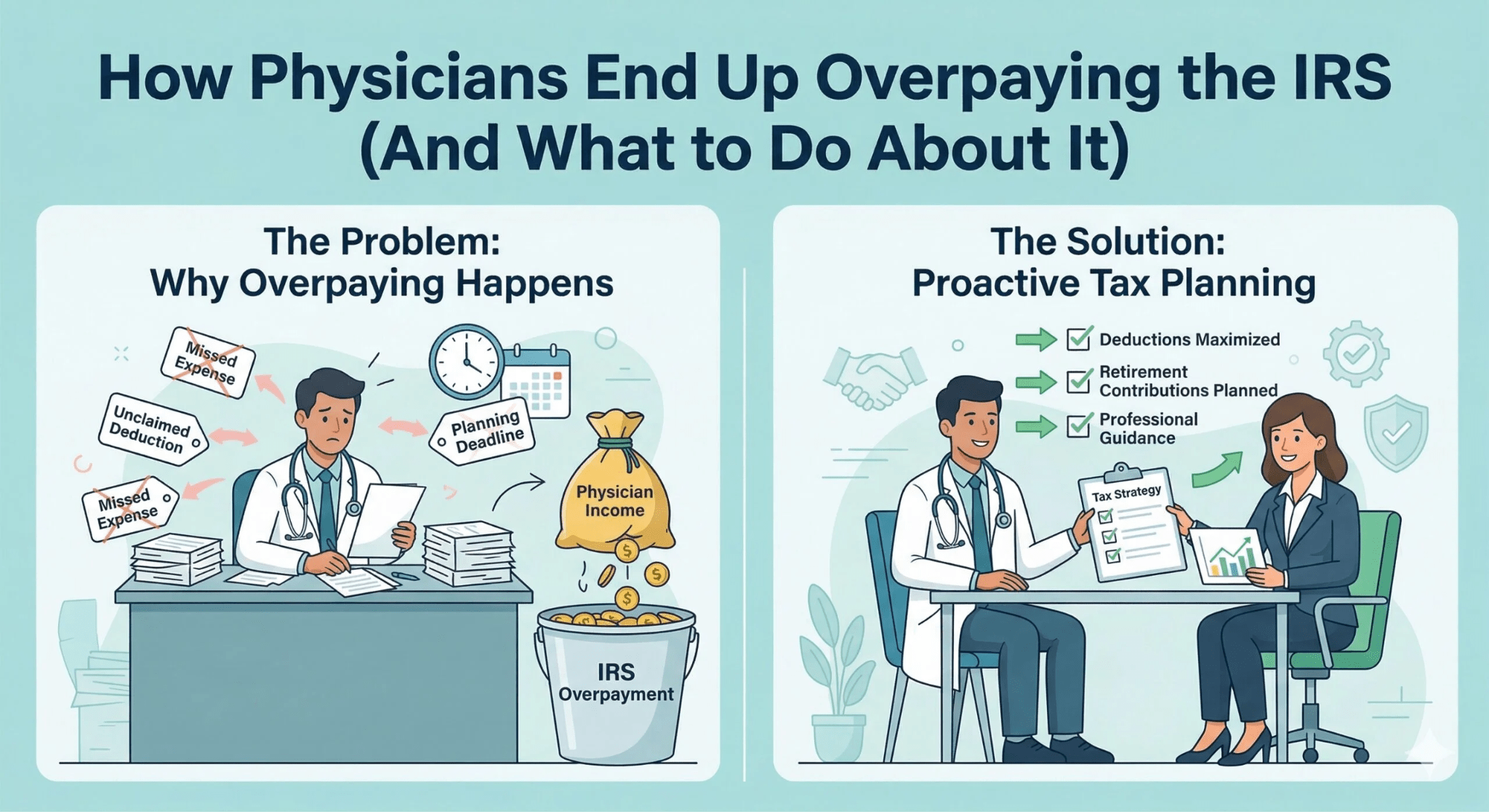
A tax victim is not someone who is careless or uninformed. In most cases, they are doing exactly what they have been told to do. They hire a CPA, submit their documents at year-end, file their return on time, and pay what they owe. From a compliance standpoint, everything is correct.
But here is the problem: nothing in that process is designed to reduce what you owe.
A traditional tax preparer operates in a reactive role. They look backward at what already happened during the year and report it accurately to the IRS. By the time your return is filed, your taxable income, your deductions, and your tax obligation are already locked in. The conversation becomes “here is what you owe,” and that is where it ends.
That is the tax victim experience. Compliant, accurate, and consistently more expensive than it needs to be.
The Tax Strategist Mindset
A tax strategist asks a fundamentally different question. Instead of “what do I owe?” they ask “what can I do before year-end to legally reduce what I will owe?”
This is where proactive tax planning begins. A tax strategist does not wait for tax season. They work throughout the year, aligning your financial decisions, entity structure, and income strategy to create real tax efficiency. They understand that the tax code is not just a system of obligations. It is a system of incentives, and when you align your financial structure with those incentives, you unlock legitimate advantages that most physicians never see.
The distinction is not subtle. Tax preparation records the outcome. Tax strategy creates it.
Why High-Income Physicians Overpay
The core issue is structural, not numerical. Most physicians are operating under a default setup, either as a sole proprietor or a single-member LLC, because no one has actively redesigned their financial structure around what the tax code actually allows. Without the right structure, a physician’s income is fully exposed to both federal income tax and self-employment tax simultaneously. Add state taxes in high-burden states, and the effective rate can easily exceed 40%.
Their CPAs are skilled at compliance, which is not a criticism. It is simply a different job. Compliance-focused advisors are trained to report what happened. Strategy-focused advisors are trained to shape what happens next. Most physicians have the former and have never been introduced to the latter.
That gap between reactive compliance and proactive strategy is where the money lives, and it is the reason so many high-earning physicians consistently pay more than they need to.
What Real Tax Strategy Looks Like
Understanding the difference between tax preparation and tax planning is important. But seeing what strategy actually looks like in practice is what makes it real.
One of the most common and impactful foundational strategies is the S-Corporation election. Many physicians operate in a way that subjects their entire income to self-employment tax. By restructuring as an S-Corp, you can split your income between a reasonable salary and shareholder distributions. Distributions are not subject to FICA or self-employment tax, which for a high-earning physician can translate to thousands of dollars in annual savings without changing a single thing about how you practice.
Another strategy that consistently surprises physicians is IRC Section 280(a). If your business holds meetings at your home, the tax code allows you to rent your home to your business for up to 14 days per year. For the business, that rental payment is a legitimate deduction. For you personally, it is non-taxable income. It is not a loophole. It is an established provision of the tax code that has historically been used by the ultra-wealthy and is fully available to medical professionals who know how to ask for it.
These are not edge cases or aggressive interpretations. They are examples of what a forward-looking strategy looks like when it is built around the actual opportunities in the code rather than just avoiding penalties.
To make it concrete: consider a general practitioner earning $380,000 annually who had filed as a sole proprietor for the first eight years of their career. After restructuring as an S-Corporation and implementing a documented home-office meeting policy under Section 280(a), their annual tax liability dropped by just over $22,000 in the first year. Nothing changed about how they practiced. What changed was how their income was structured before it ever reached a tax return. That kind of outcome is not exceptional. For physicians who have never had a proactive strategy in place, it is closer to typical.
Find Out How Much You Could Be Keeping
Most physicians are surprised to learn how much their current structure is costing them. A personalized review takes less than an hour and often surfaces specific, actionable strategies that your current advisor has never raised.
Get Your Free Tax Strategy Review and find out what a proactive plan could look like for your practice.
The Compounding Cost of Staying Reactive
The most important reason to stop being reactive is not this year’s tax bill. It is what staying reactive costs you over time.
A physician who overpays by $15,000 annually for 30 years has paid $450,000 more than necessary. If that same money had been invested consistently, the compounded impact is significantly larger. Taxes are one of the few major financial variables in your life that can actually be influenced with the right structure in place. Most of the other variables, market performance, malpractice premiums, overhead, are outside your control. Your tax liability, to a meaningful degree, is not.
Remaining reactive does not just cost you money. It keeps your tax bill in the fixed outcome column when it belongs in the variable column.
What Sets Legally Mine Apart
Most of the physicians we work with have worked with a CPA for years before finding us. They are not unhappy with their CPA; their returns are accurate and filed on time. What they did not have was someone focused entirely on what could be done differently.
Legally Mine’s tax strategists are not compliance generalists. They work exclusively with medical and business professionals, which means they understand the specific entity structures, deduction opportunities, and income patterns that are unique to your practice. They also coordinate directly with your existing CPA and financial advisor, so nothing falls through the cracks between the people managing your financial life.
The result is not just a lower tax bill this year. It is a financial structure designed to keep more of what you earn for the entire length of your career.
Frequently Asked Questions
What does it mean to be a tax strategist? A tax strategist proactively plans and structures financial decisions throughout the year to reduce tax liability legally. This involves entity structuring, leveraging specific provisions in the tax code, and ongoing planning rather than simply reporting what happened at year-end.
Why do high-income physicians overpay in taxes? Most physicians overpay because their financial structure was set up for convenience, not optimization. Without an S-Corp election, strategic deductions, or income-timing strategies, a larger percentage of their income is fully taxable than necessary. Working with a tax strategist who understands the medical professional landscape changes that equation.
How can physicians reduce taxes legally? Common strategies include S-Corporation elections to reduce self-employment tax exposure, leveraging IRC Section 280(a) for home business use, structured deductions, and income-timing strategies. All of these require proper documentation and implementation to remain fully compliant, which is why working with a knowledgeable tax professional matters.
Does Legally Mine work with my existing CPA? Yes, and this is one of the most important things to understand about how we work. We are not a replacement for your CPA. Your CPA handles compliance, ensures your return is accurate, and manages your filing obligations. We build and implement the forward-looking tax strategy that informs what your CPA then reports. Think of it as adding a strategist to a team that already has a compliance expert. The two roles are complementary, not competitive. We communicate directly with your existing advisors so that your full financial picture stays coordinated and nothing falls through the gaps between the people managing your financial life. Many of the physicians we work with tell us their CPAs were relieved to have a strategy-focused partner handling that side of the conversation.
The Bottom Line
You do not have to be a tax victim.
The tax code is not designed to take more than necessary. It is designed to reward those who understand how to use it. When you shift from reactive preparation to proactive planning, the outcomes change meaningfully and permanently.
The physicians we work with do not spend less time on their careers because of this process. They just stop overpaying for the privilege of having one.
Schedule Your Free Consultation to find out what a personalized tax strategy could look like for you. Or learn more about how our Tax Strategies work and what a full plan includes.
About Legally Mine
Legally Mine is a leading asset and lawsuit protection company that helps businesses and professionals proactively manage risk. Through specialized consulting and proven legal structures, Legally Mine provides practical tools to protect personal and business assets, reduce liability exposure, and give owners peace of mind, so they can focus on running their business with confidence.