

The real advantage comes from strategic structuring. When built correctly, strategic entity structuring shields your wealth by separating risk, protecting personal assets, and creating opportunities for better tax planning. Instead of placing every investment, business activity, or asset in one place, professionals use multiple legal structures to create a system designed for both protection and efficiency.
This approach is especially important for business owners, medical professionals, and real estate investors who face higher exposure to lawsuits and financial risk. By organizing assets across different legal entities, owners can limit the reach of creditors, reduce tax inefficiencies, and protect long-term wealth from unexpected legal threats.
The key idea is simple: each entity acts like a separate container that holds certain assets or business activities. When those containers are structured properly, they help shield wealth while also creating tax advantages that a single structure simply cannot provide.
Schedule a Free Consultation with Legally Mine!
Why Entity Structure Matters for High-Earning Professionals
Many professionals spend years building successful practices or businesses only to realize they are paying far more in taxes than expected. Often the issue is not income it is the business structure used to report and manage that income.
Without proper structuring, many professionals operate under a sole proprietorship or a single limited liability company, exposing multiple business assets to the same level of legal risk. If a lawsuit occurs, a creditor may be able to pursue everything held inside that entity.
Strategic asset protection strategies solve this problem by separating operations, investments, and ownership across multiple entities. This type of entity structure reduces legal exposure and strengthens overall protection against lawsuits or business disputes.
It also plays a major role in tax planning. The way a business is structured determines how income is taxed, whether owners face self-employment tax, and whether they benefit from available deductions or other tax benefits within the current tax law.
For professionals earning high incomes, this type of planning can significantly reduce unnecessary tax liability while improving long-term financial stability.
Understanding How an LLC Protects You
One of the most common questions professionals ask is how a limited liability company actually protects them. The purpose of an LLC is to create a legal boundary between the business and the individual who owns it.
This concept is called limited liability, meaning the owner is generally not personally responsible for business debts or legal claims brought against the company. If the business faces a lawsuit, creditors typically cannot pursue the owner’s home, savings, or other personal assets.
However, the level of liability protection provided by an LLC depends heavily on how the entity is structured and maintained. Courts may remove that protection if owners mix personal and business finances or fail to follow legal formalities.
This is why proper llc formation and ongoing compliance are essential. When structured properly, an LLC becomes one of the most effective tools for protecting business assets and limiting personal liability.
What Does an LLC Protect You From?
An LLC helps protect owners from many common business-related liabilities. For example, if a company faces a contract dispute, vendor claim, or certain types of lawsuits, the legal claim is typically limited to assets owned by that business.
That protection can prevent creditors from accessing personal bank accounts, investment accounts, or other personal wealth.
However, an LLC does not eliminate all forms of liability. Professionals remain responsible for their own malpractice or negligence claims. Additionally, if valuable assets such as real estate or intellectual property are held in the same entity as day-to-day operations, those assets may still be exposed if a lawsuit occurs.
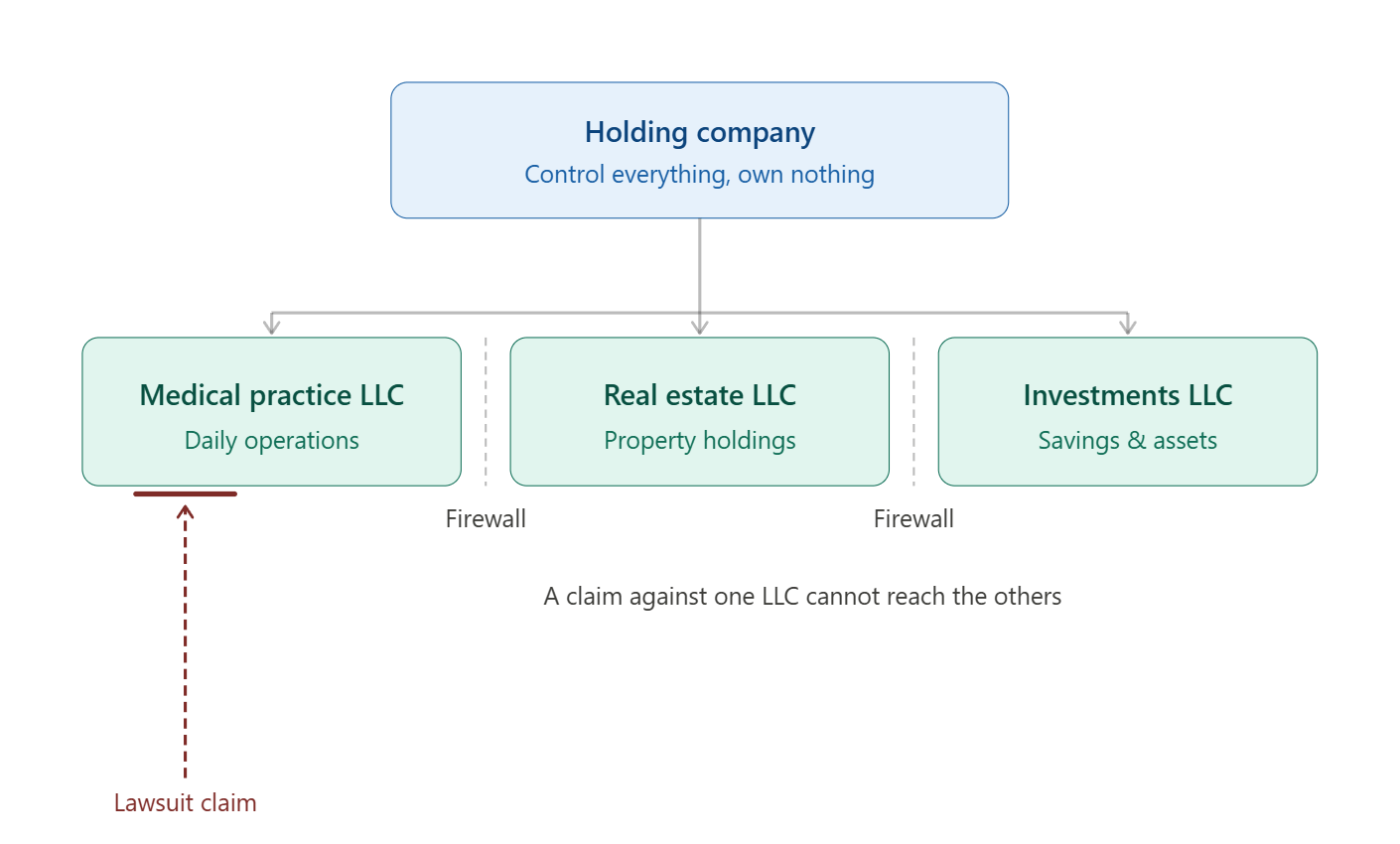
Because of these risks, many asset protection strategy frameworks rely on multiple entities instead of one. Separating different activities into different structures helps ensure that a single legal issue does not threaten everything a professional has built.
LLC vs S Corporation Taxes
Another major factor in structuring is taxation. Many professionals operate an LLC but never explore whether they should elect S corporation taxation.
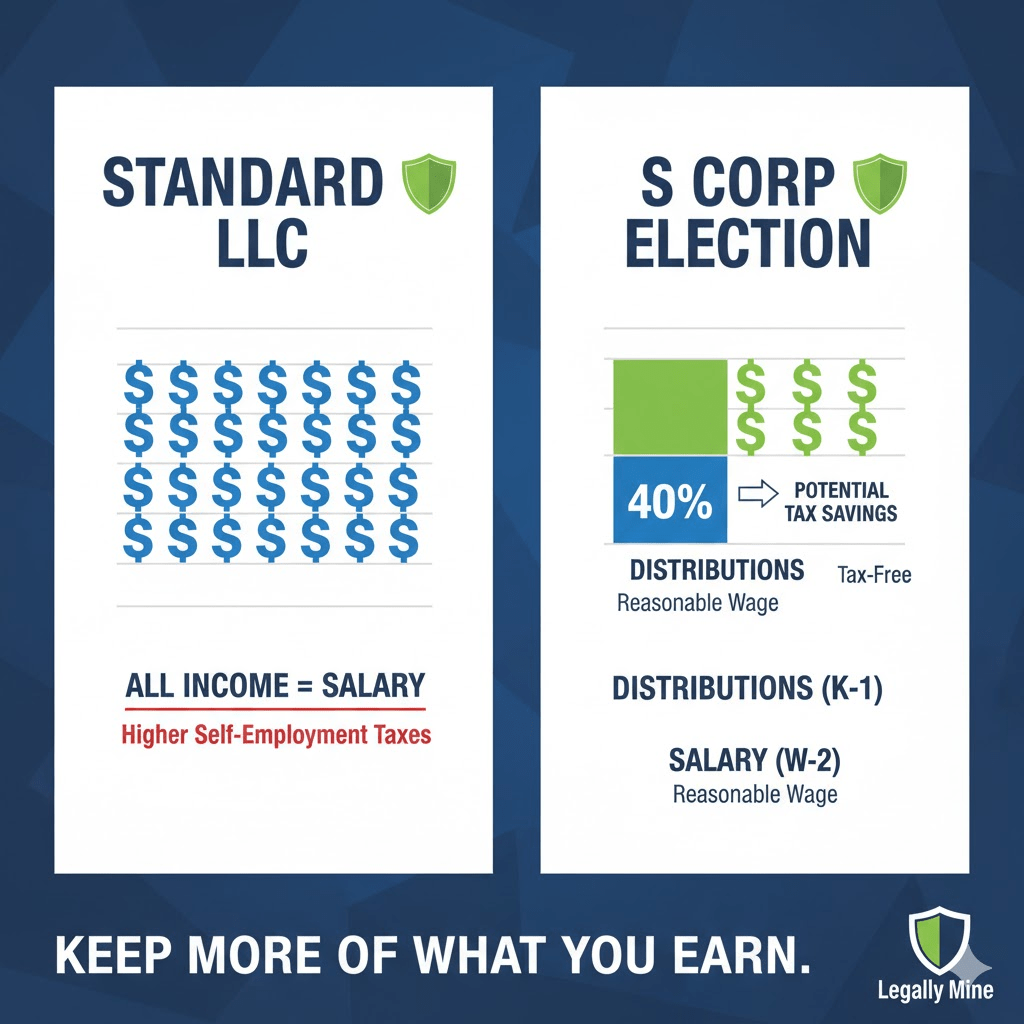
This distinction matters because an LLC is a legal entity, while an S corp is a tax classification. By electing s corporation taxation, owners may be able to reduce certain payroll taxes while maintaining the limited liability protection of the LLC.
Under this structure, the owner receives a reasonable salary that is subject to payroll taxes, while additional profits may be distributed differently. This approach can reduce self employment tax for high earners when implemented correctly.
Some businesses may eventually consider transitioning into a C corporation or c corp, particularly when scaling operations or planning for outside investors. However, these structures may involve double taxation, meaning profits are taxed at both the corporate and shareholder levels.
Choosing the right structure requires evaluating income levels, growth plans, and long-term tax implications.
Contact Legally Mine and Get Started Today!
The Role of Holding Companies and Trusts
As professionals accumulate assets and investments, the need for stronger protection becomes more important. One solution often used in advanced structuring is the holding company.
A holding company owns other entities or assets rather than operating a business itself. This allows professionals to separate operational risk from valuable property such as real estate, intellectual property, or investment portfolios.
Many real estate investors use this approach for real estate investment holdings, placing each property in a separate entity while a parent company maintains ownership. This structure helps prevent a lawsuit tied to one property from affecting other investments.
In more advanced situations, professionals may also integrate trusts into their planning. Structures such as asset protection trusts, irrevocable trust arrangements, or even a domestic asset protection trust can provide additional layers of security for long-term wealth preservation.
Some investors explore international options like offshore trusts or an offshore trust, though these strategies must be implemented carefully to comply with tax law and regulatory requirements in the United States.
Partnerships and Alternative Entity Structures
Not every business operates as an LLC or corporation. Some professionals may operate under a general partnership, while others may use a limited partnership where certain owners act as limited partners rather than active managers.
Each type of entity comes with its own advantages, risks, and tax implications. For example, partnerships allow profits and losses to pass directly to owners, avoiding double taxation. However, they may expose partners to higher levels of liability depending on the structure.
Because of these differences, selecting the correct business formation strategy is critical for both tax efficiency and liability protection.
Does Your Current Structure Actually Protect Your Assets?
Many professionals assume that once they create an LLC, their asset protection plan is complete. In reality, most businesses require a more comprehensive strategy.
A single entity holding multiple investments, income streams, and operational risks can leave owners exposed to unexpected legal challenges. If that entity becomes the target of a lawsuit, creditors may pursue everything it owns.
A well-designed entity structure separates those risks while improving overall protection for both business assets and personal wealth.
This type of planning often overlaps with estate planning, particularly for professionals who want to ensure their wealth is preserved for future generations. When done correctly, the same strategy that protects assets today can also support long-term estate goals.
Asset Protection Strategies Tax Strategies
Strategic Structuring as a Long-Term Wealth Strategy
For high-earning professionals, entity structuring is not just a legal formality, it is a long-term strategy for protecting wealth, improving tax planning, and managing risk.
The professionals who benefit the most from these strategies are those who implement them early. Waiting until a lawsuit appears or a tax issue arises often limits available options.
Strategic structuring ensures that businesses, investments, and personal holdings are organized in a way that strengthens protection, improves tax efficiency, and supports long-term financial growth.
When done correctly, it becomes one of the most powerful asset protection strategies available to modern business owners.
FAQs
What is the difference between an LLC and an S-Corporation for a medical professional?
An LLC is a legal structure that provides limited liability protection. An S corporation is a tax election that may reduce self employment tax while maintaining liability protection.
What is a holding company and do I need one?
A holding company owns other businesses or assets rather than operating directly. It helps separate risk and improve asset protection for investments like real estate.
Can the same legal entity both protect my assets and reduce my taxes?
Sometimes, but many professionals benefit from using multiple entities together to improve both tax planning and liability protection.
Does my current LLC actually protect my personal assets from a lawsuit?
It depends on how the entity is structured and maintained. Many single-entity structures still leave owners vulnerable if multiple assets are exposed within the same company.
Protect Your Wealth with the Right Structure
The right structure protects your assets and reduces your taxes, but it must be built correctly from the start.
If your current structure was created quickly or without a comprehensive strategy, it may be leaving gaps in both asset protection and tax efficiency.
Schedule your free consultation with Legally Mine to find out what your current structure may be missing.
About Legally Mine
Legally Mine is a leading asset and lawsuit protection company that helps businesses and professionals proactively manage risk. Through specialized consulting and proven legal structures, Legally Mine provides practical tools to protect personal and business assets, reduce liability exposure, and give owners peace of mind, so they can focus on running their business with confidence.